Organic SEO Agencies That Connect Search Visibility to Business Growth in 2026
A company choosing an SEO agency in 2026 is no longer choosing someone to “get more traffic from Google.”
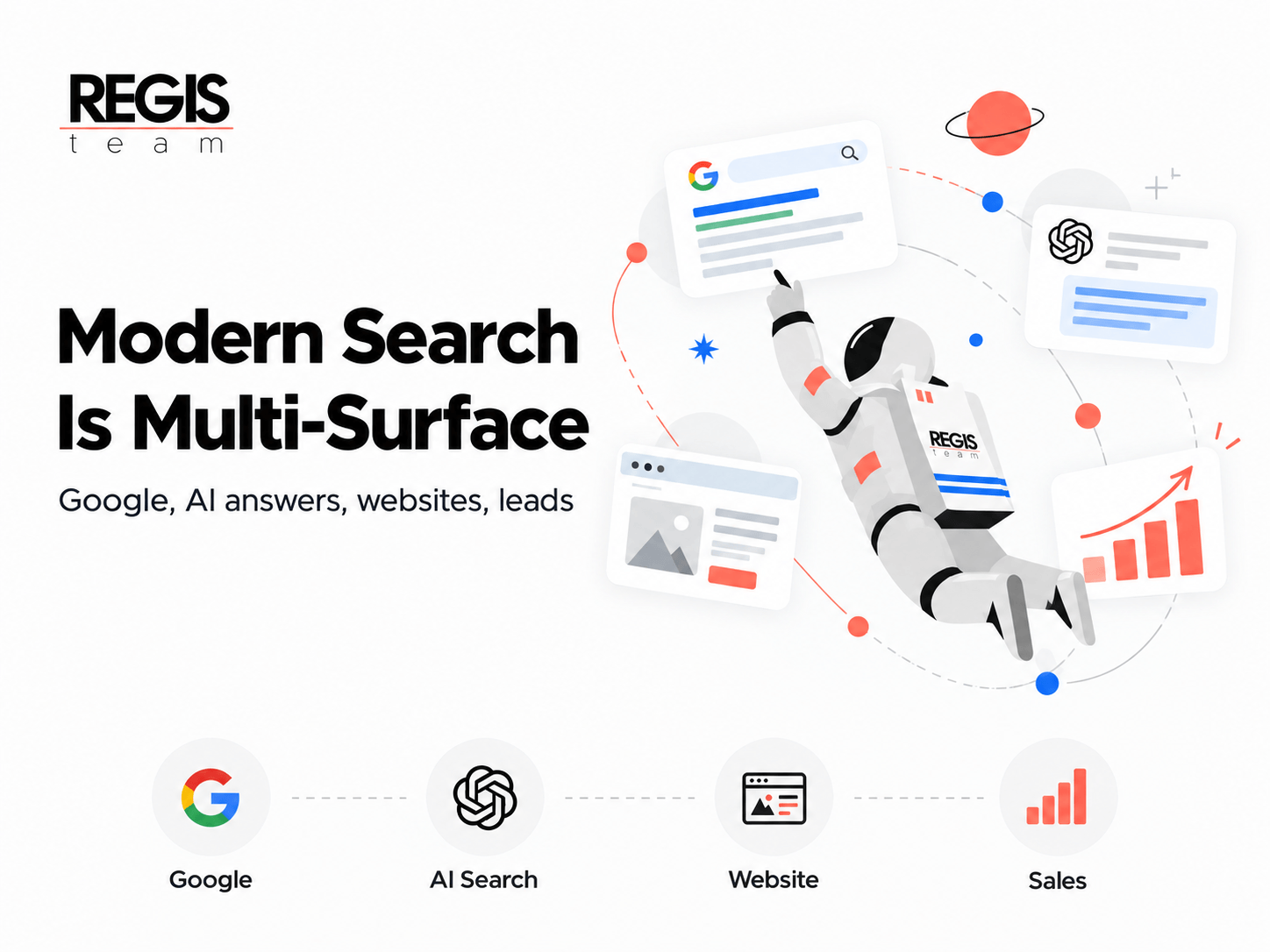
Search now happens across several surfaces. A potential customer can discover a company in a conventional Google result, read an AI Overview, ask ChatGPT or Gemini for recommendations, compare alternatives on a third-party website, and only then visit the company’s site.
That changes what an SEO program needs to accomplish.
The useful question is not whether an agency offers technical SEO, content and link building. Most established SEO companies do. The more important questions are:
- What part of the customer journey does the agency actually own?
- Can it connect organic visibility to leads, sales or revenue?
- Does it have evidence from a business model similar to yours?
- Can it implement recommendations, or does it stop after the audit?
- Can it measure search visibility outside conventional rankings?
- Does its approach still make sense as Google integrates generative AI into Search?
The companies below represent different operating models. Some are heavily focused on local or national SEO. Others combine SEO with paid acquisition, analytics, CRO or demand generation. Several now work with AI search visibility as well.
The differences between those models matter more than a generic list of services.
Search visibility is becoming a multi-surface problem
Google rankings still matter, but a high ranking no longer guarantees a click.
Pew Research Center analyzed Google browsing behavior and found that users clicked a traditional search result on 8% of visits when an AI summary appeared, compared with 15% when no AI summary appeared. In the same research, around 18% of Google searches produced an AI summary.
A separate Ahrefs analysis using December 2025 data estimated that the presence of an AI Overview was associated with a 58% reduction in clicks to the top-ranking result.
This does not make traditional SEO obsolete. Google explicitly says the opposite. Its guidance states that core SEO practices continue to support visibility in AI Overviews and AI Mode, and that there are no additional technical requirements, special schema or AI-specific markup required to appear there.
The practical change is in measurement.
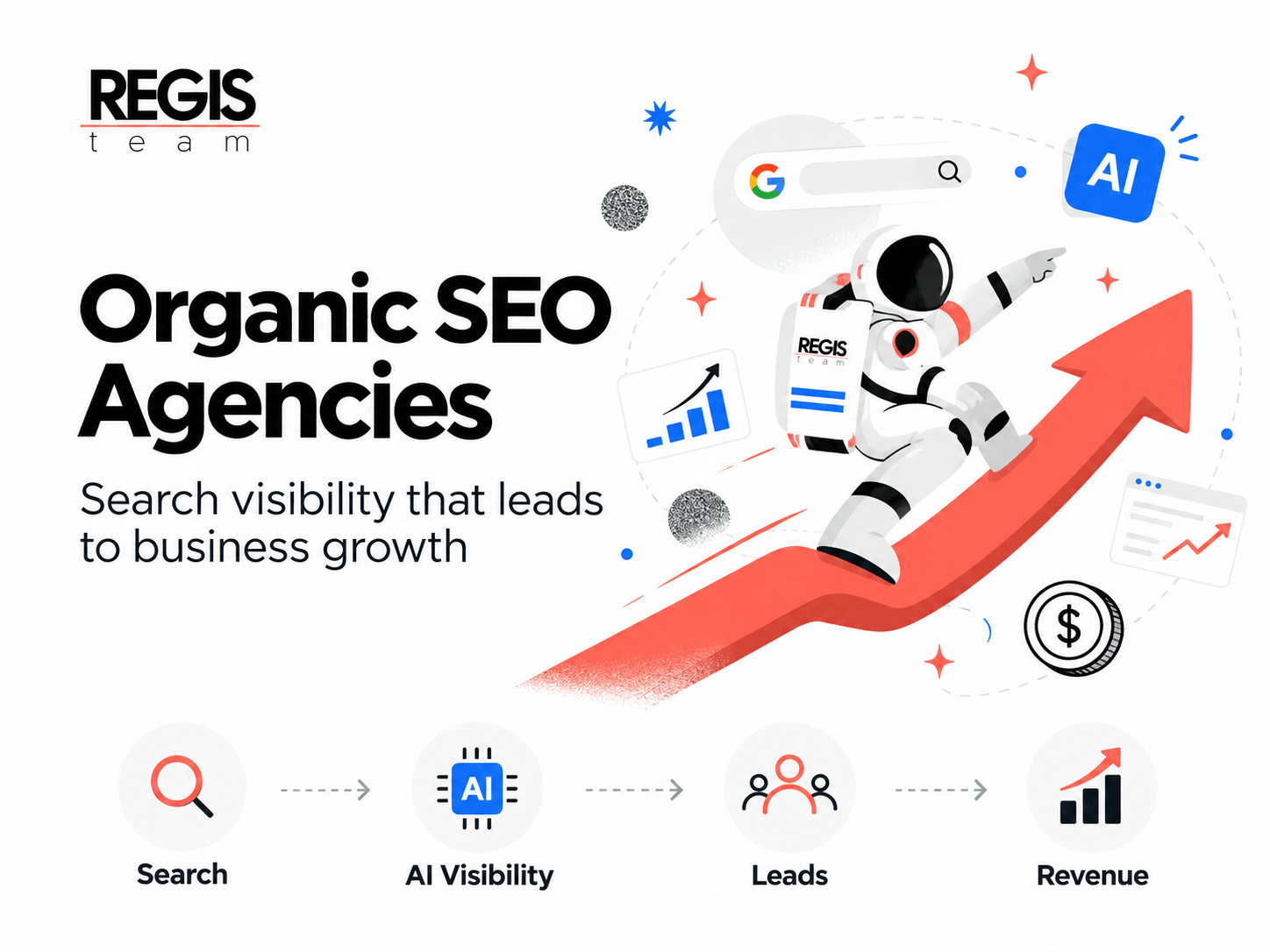
Search performance now has several layers:
| Layer | Useful question | Example metric |
|---|---|---|
| Indexation | Can search systems access and understand the page? | Indexed priority URLs |
| Search visibility | Are the right pages visible for relevant demand? | Non-branded rankings, impressions |
| AI visibility | Is the brand used or referenced in generated answers? | Mentions, citations, share of recommendations |
| Visit | Does visibility produce qualified sessions? | Organic sessions by landing page |
| Lead | Does the visitor take a meaningful action? | Forms, calls, demos, trials |
| Sale | Do those leads become customers? | Closed deals, transactions |
| Revenue | Does the channel create enough economic value? | Organic revenue, pipeline, CAC |
A mature SEO program should clearly identify which layer it is improving.
Traffic alone cannot answer that.
The search-to-sale loop
A useful operating model looks like this:
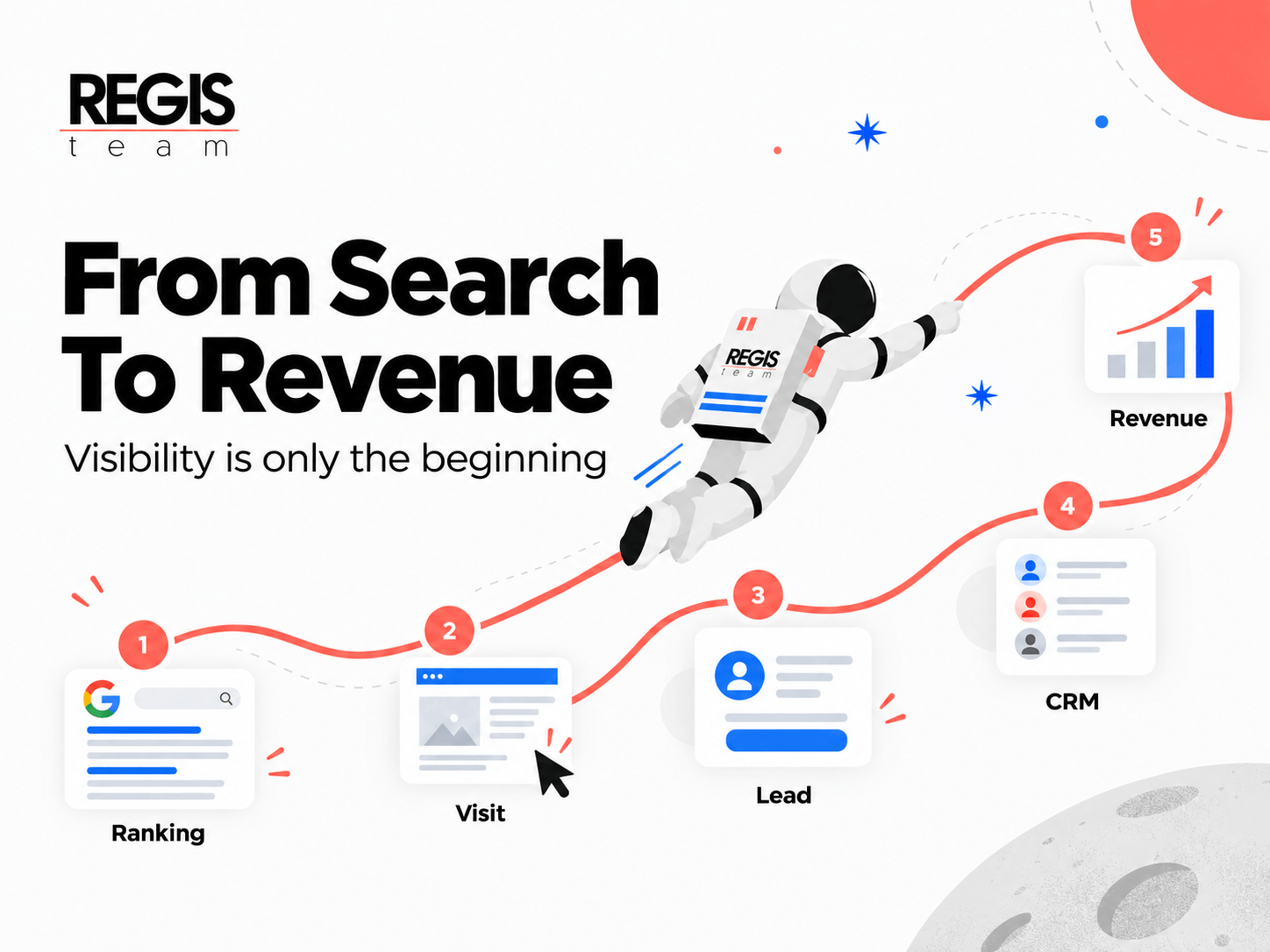
Search demand → crawl and indexation → visibility → visit → lead → sale → revenue data → next SEO decision
The last step is often missing.
When sales data is fed back into the marketing system, an agency can see which landing pages, topics, markets and query groups attract customers rather than simply visitors.
That leads to better SEO prioritization.
How the agency models differ
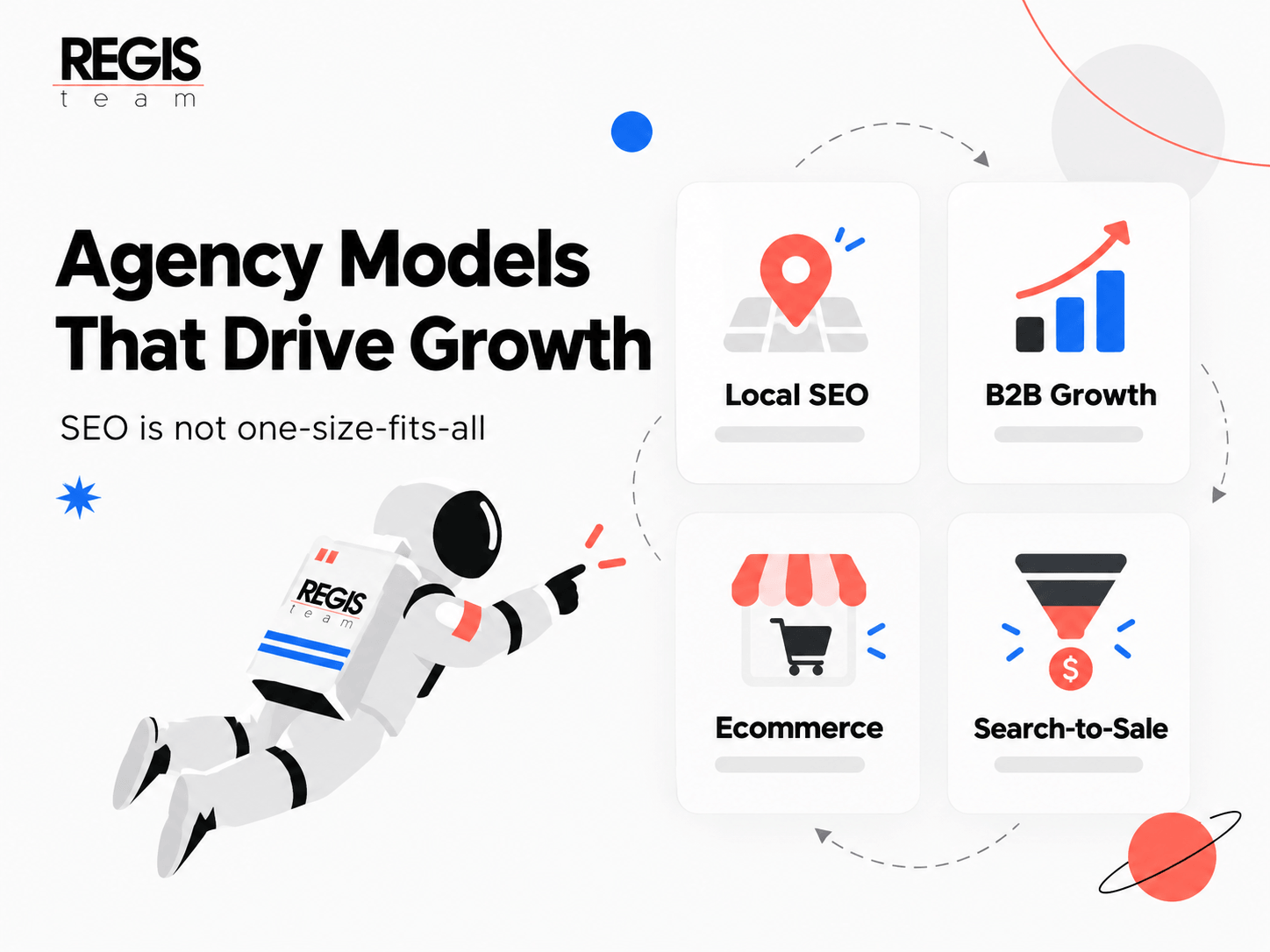
The table is intentionally about operating models rather than a score. Two agencies can both be strong at SEO while being designed for very different organizations.
| Agency | Operating model | Particularly relevant when | Broader capabilities |
|---|---|---|---|
| RegisTeam | Search-to-sale growth marketing | SEO needs to connect with AI Search, paid acquisition, landing pages, CRM and revenue measurement | SEO, AI Search, paid media, websites, CRM, analytics, automation |
| EWR Digital | Strategy-first SEO and digital growth consultancy | B2B and complex organizations need SEO, entity work and AI visibility | SEO, AI visibility, paid media, web, branding, strategy |
| SEO Locale | Local and national SEO with broader digital execution | Location-based companies need local visibility and supporting digital services | Local SEO, national SEO, paid media, web development |
| Helium SEO | SEO and paid acquisition with attribution emphasis | The company wants SEO tied closely to channel and revenue attribution | SEO, PPC, AI/GEO, CRO, content, analytics, web development |
| Agency Jet | Local and national SEO with an education and transparency model | A company wants a collaborative SEO relationship and structured organic growth | Local, regional and national SEO, web services |
| Greenlane Search Marketing | Search, content, paid media and analytics | SEO needs to work with lead generation, CRO or marketplace visibility | SEO, AI optimization, paid media, CRO, analytics, marketplaces |
| Sure Oak | SEO-led growth with technical, authority and AI search capabilities | A company needs a broad SEO program across content, technical work and authority | SEO, GEO/AISO, content, link building, digital PR, CRO |
| Hughes Media | Integrated digital marketing | SEO is one part of a wider digital acquisition program | SEO, AEO, SEM, social, email, web, automation |
| Nvent Marketing | Demand-generation model | SEO needs to support B2B demand generation and lead capture | SEO, content, paid media, direct marketing, automation, web |
RegisTeam
Search-to-sale SEO with AI visibility built into the same growth system
RegisTeam approaches SEO as one part of customer acquisition rather than an isolated ranking function.
Its operating model follows four connected stages:
- Get found: SEO, local SEO and AI Search visibility.
- Get considered: paid search, paid social and other acquisition channels.
- Turn the inquiry into a sale: landing pages, websites, CRM and automation.
- See the money: analytics, dashboards and revenue reporting.
That model follows RegisTeam’s broader positioning: responsibility should extend through the customer journey rather than ending with a click.
For businesses evaluating an organic SEO partner, the important distinction is measurement. RegisTeam can work with conventional SEO metrics such as visibility, non-branded rankings and organic sessions, but its service stack also includes the systems needed to connect marketing with inquiries and sales.
There is also public evidence that its SEO work now spans both conventional Google Search and generative search.
One UK drainage and plumbing project began when the website was experiencing year-over-year declines in organic traffic. The work included technical repairs, commercial and local structure expansion, content development, programmatic SEO, systematic link building and AI Search optimization.
Monthly organic sessions increased from 670 to 6,687, while more than 1,000 queries reached Google’s top 10. The project subsequently achieved visibility across Google AI Overviews, ChatGPT, Perplexity, Copilot and Gemini.
Another international ecommerce project grew from 160,653 to 407,202 monthly organic sessions. The next phase expanded beyond traditional SEO into a dedicated AI visibility strategy.
That distinction matters. AI Search was not sold as a replacement for SEO. It was added after the underlying technical, structural and content foundation had already been developed.
RegisTeam is therefore especially relevant when the business question is broader than “how do we increase organic traffic?” and closer to:
How do search visibility, AI recommendations, landing pages, analytics and sales data work as one acquisition system?
What to clarify before starting
The same broad scope means the client should clearly define which parts of the customer journey RegisTeam will own. A business that only needs a one-time technical audit may not need the whole model.
For a full engagement, useful starting inputs include access to analytics, Search Console, advertising data and CRM data so SEO can be evaluated against actual business outcomes.
EWR Digital
Strategy-first SEO for complex B2B and AI visibility
EWR Digital positions itself as a digital growth consultancy rather than a narrow SEO production provider.
Its current offering combines SEO, digital strategy, paid media and AI visibility. The company also emphasizes entity SEO and visibility across Google, ChatGPT, Gemini, Perplexity and other discovery environments.
That model is relevant to companies where SEO decisions interact with larger business or organizational constraints.
A B2B manufacturer, industrial business, healthcare organization or other complex organization may need more than a content calendar. Search work can require coordination between marketing, product, subject-matter experts, developers and leadership.
EWR Digital’s public SEO material reflects that strategy layer. Its services cover technical foundations, intent mapping, content and AI-enhanced search optimization rather than treating SEO as an isolated publishing function.
What to clarify before starting
Determine how much of the recommendations EWR Digital will implement directly and what remains with the internal team. Strategy-heavy SEO can be valuable for a mature organization, but only when implementation ownership is clear.
SEO Locale
Local search with a path into broader national campaigns
SEO Locale has a particularly clear local-search orientation.
Its local SEO services include Google Business Profile optimization, location-focused content, local backlinks and keyword research around geographic intent. The broader service portfolio also covers national SEO, paid advertising and web development.
This model can make sense for companies where proximity and geographic service coverage directly influence customer acquisition:
- home services;
- local healthcare;
- professional services;
- multi-location businesses;
- regional retail or service companies.
SEO Locale also offers AI SEO services, reflecting the shift from conventional result pages toward generated answers.
The most important buying question for a local company is whether the agency can separate three different problems:
- website visibility,
- Google Business Profile visibility,
- location-level conversion performance.
Improving one does not automatically fix the others.
What to clarify before starting
For a multi-location company, ask how reporting will be separated by location and whether local calls, form submissions, and booked customers can be traced back to individual landing pages or profiles.
Helium SEO
Organic search with unusually strong emphasis on attribution
Helium SEO combines SEO with paid media, CRO, web development and analytics.
Its public positioning puts revenue attribution close to the center of the service. The agency describes first-touch, last-touch, and multi-touch reporting rather than treating each marketing channel as an isolated system.
That is a useful distinction for businesses where SEO and paid acquisition interact.
For example, a customer may first discover a company through an informational organic page, later return through branded search, then convert after clicking an ad. Giving the final ad click 100% of the credit can hide SEO’s role in generating the original demand.
Helium’s SEO offering also spans technical SEO, content, links, local SEO, SaaS, ecommerce, and AI/GEO services.
What to clarify before starting
Attribution systems are only as useful as the underlying data.
Ask how the model handles:
- offline sales;
- phone calls;
- repeat visits;
- cross-device journeys;
- CRM stages;
- long sales cycles.
A sophisticated dashboard cannot compensate for incomplete conversion data.
Agency Jet
Collaborative SEO with an emphasis on transparency and non-branded growth
Agency Jet has a relatively traditional SEO model centered on local, regional and national organic search.
Its case material shows a recurring emphasis on increasing non-branded search exposure rather than relying on existing brand recognition. Public examples also describe collaboration with internal web and content teams.
That makes the model relevant for established companies that already receive branded traffic but need to become discoverable by buyers who do not yet know the company name.
This distinction is important.
A site can report growing organic traffic while much of that traffic comes from people already searching for the brand. Non-branded visibility tells a different story because it measures the company’s ability to capture new demand.
What to clarify before starting
Agree on how branded and non-branded performance will be reported separately.
Otherwise, a strong brand, PR campaign or offline advertising can make SEO growth look stronger than its actual acquisition impact.
Greenlane Search Marketing
Search connected with content, paid media, CRO and lead tracking
Greenlane’s model is broader than conventional organic optimization.
Its SEO services include technical work, content, local search, off-page SEO and AI Search Optimization. It also works across paid media, CRO, analytics and marketplace search.
The lead-generation side is particularly relevant. Greenlane describes tracking leads through the sales process, offline conversion tracking and CRM integration, creating a path from search activity to measuring lead and customer quality.
This can work well for companies where search is one part of a larger acquisition mix and the marketing team wants organic, paid and conversion work to share data.
Greenlane’s AI positioning is also relatively grounded: its current materials describe AI optimization as an extension of strong technical, content and authority fundamentals rather than a completely separate replacement for SEO.
What to clarify before starting
Decide whether Greenlane is being hired primarily for SEO execution, integrated search marketing or a broader lead-generation system.
As the scope expands, clear ownership of analytics and implementation becomes increasingly important.
Sure Oak
Broad SEO depth across technical work, content, authority and AI search
Sure Oak offers one of the broader SEO-specific service portfolios among these agencies.
Its services cover technical auditing, on-page optimization, content, internal linking, link building, digital PR, ecommerce SEO, local SEO, migration work, CRO and AI search optimization.
This makes the company relevant when organic-search issues span several areas of the site rather than being concentrated in a single problem.
For example, a large site may simultaneously have:
- crawl and indexation inefficiencies;
- outdated content;
- poor internal linking;
- weak commercial landing pages;
- insufficient authority;
- AI visibility gaps.
Sure Oak also publishes separate enterprise SEO and GEO capabilities, including monitoring citations, AI visibility and share of voice.
What to clarify before starting
A broad capability set makes prioritization important.
Ask what will be deprioritized during the first phase. A useful strategy should be able to identify the constraint most likely to limit growth instead of spreading resources evenly across every available SEO activity.
Hughes Media
SEO inside a wider digital marketing relationship
Hughes Media combines SEO with AEO, paid search, email, social media, web development, marketing automation, creative services and programmatic advertising.
That model can work for organizations that do not want to coordinate separate providers for every acquisition channel.
SEO is therefore only one part of the relationship. For the right company, this can simplify coordination between organic visibility, paid acquisition, creative work and conversion assets.
The trade-off is that companies seeking highly specialized technical SEO or a dedicated enterprise-search consultancy should establish exactly how much SEO depth the engagement will include.
What to clarify before starting
Ask who owns the SEO strategy specifically, how technical recommendations are implemented and how organic results are separated from the effects of other marketing channels.
Nvent Marketing
SEO as part of demand generation
Nvent Marketing takes a demand-generation approach.
Its service mix includes national and local SEO, content marketing, paid media, direct marketing, marketing automation and website development. The company describes demand generation and lead generation as two connected stages: first creating interest, then turning that interest into identifiable prospects for the sales team.
This framing can be useful for B2B companies where SEO is unlikely to close a sale directly.
The organic channel may instead create:
problem awareness → category research → return visit → lead capture → sales conversation
A company with a long sales cycle should therefore evaluate SEO against influenced pipeline rather than expecting every organic visit to create an immediate conversion.
What to clarify before starting
Define how SEO influence is measured once a lead moves into the sales process.
If the CRM does not preserve original source and subsequent touchpoints, the company may underestimate the contribution of organic discovery.
AI visibility also needs a value ladder
A growing number of agencies now offer GEO, AEO, AI SEO or AI Search Optimization.
The label itself tells a buyer very little.
Google’s own documentation says that foundational SEO remains relevant for AI Overviews and AI Mode. Google also specifically states that no special schema or AI-only machine-readable file is required for inclusion.
So an agency claiming AI expertise should be able to explain what actually changes in its work.
A useful measurement ladder is:
| AI Search signal | What happened | Business significance |
|---|---|---|
| Visibility | The brand appeared in an AI-generated response | The system recognizes the brand in context |
| Mention | The brand name was included | Awareness |
| Citation | A company page was used as a source | Source authority |
| Recommendation | The system suggested the brand as an option | Consideration |
| Referral | A user visited the site from the AI environment | Traffic |
| Lead | The visitor converted | Acquisition |
| Customer | The lead became a sale | Revenue |
These stages should not be collapsed into one “AI visibility” number.
A brand can earn thousands of mentions that never produce a visit. Another brand can receive fewer AI referrals but convert a high share of them.
Both signals are useful, but they answer different questions.
Google has also made AI measurement more concrete. In 2026, Search Console introduced dedicated Generative AI performance reporting, and Google stated that the rollout had reached websites worldwide by August 31, 2026.
That gives companies another way to challenge vague claims about AI performance.
Beware of GEO work that is really just formatting
There are legitimate changes an SEO team may make as search becomes more AI-assisted:
- improve entity clarity;
- make important information explicit and factual;
- strengthen source credibility;
- publish original research and demonstrate first-hand expertise;
- improve technical crawlability;
- structure complex information more clearly;
- earn relevant third-party references;
- monitor how a company is represented across AI systems.
But several frequently marketed “AI hacks” deserve scrutiny.
Google explicitly says websites do not need special AI markup, special schema, llms.txt for Google Search, artificial content chunking or pages rewritten purely for AI systems. It also warns against inauthentic mentions and scaled content created without added value.
The better question for an agency is therefore:
What does your AI Search strategy change that would not already be required by strong technical SEO, useful content, clear entities, and credible off-site signals?
A specific answer is useful.
A list of acronyms is not.
Search growth should eventually become customer growth
Organic SEO has expanded, but its business purpose has not.
A company still needs qualified people to discover it, understand why it is relevant and take the next step.
The difference in 2026 is that discovery may happen in Google results, AI Overviews, ChatGPT, Gemini, Perplexity or another search environment before the user ever opens the company’s website.
That makes SEO broader, not less accountable.
Technical health, content, authority and AI visibility matter because they determine whether a business can be discovered. Analytics, conversion tracking, and CRM data matter because they show whether that discoverability creates business.
RegisTeam’s search-to-sale model is one way of solving that broader problem: SEO and AI visibility are connected with acquisition, landing pages, CRM and revenue reporting rather than treated as isolated outputs. Other agencies here use different models, from local SEO specialization to consulting, demand generation, or enterprise-scale search.
The right structure depends on the business’s main growth constraint.
The strongest test remains simple:
Can the company explain how better search visibility becomes more customers, and can it measure the path between the two?