Best B2B SaaS Google Ads Experts
Poorly managed Google Ads campaigns are not getting cheaper. WordStream’s 2026 benchmark, based on more than 13,000 US search advertising campaigns, puts the average cost per click at $5.42, the average conversion rate at 8.18%, and the average cost per lead at $66.69. The same dataset shows that CPC has more than doubled from $2.32 in 2016.
That changes what “good Google Ads management” should mean. The question is no longer whether an agency can launch Search, Performance Max or remarketing campaigns. Most can. The useful distinction is whether it can identify which conversions have commercial value, control where automated campaigns spend money, connect advertising data with CRM outcomes, and tell the difference between incremental growth and demand the brand would have captured anyway.
Measurement infrastructure has also changed. Since June 15, 2026, Google has been moving offline conversion imports and enhanced conversions for lead uploads to the Data Manager API, while its enhanced-conversion setup now accepts user-provided data across tags, Data Manager, and API connections. That makes CRM integration and conversion-data architecture a practical agency-selection issue rather than an optional technical extra.
The agencies below solve that problem in very different ways. This is not a 1–10 ranking. A B2B SaaS company selling six-figure contracts should not select a Google Ads partner using the same criteria as an ecommerce store, a local lead-generation business or an early-stage software company.
Google Ads agencies and supporting tools worth considering
The agencies and tools below differ in their focus, measurement approach and ideal client profile:
| Company | Strongest fit | What makes the model different |
|---|---|---|
| RegisTeam | Ecommerce, B2B and lead-generation businesses needing measurable PPC execution | Large public case library, multi-market experience and detailed campaign-level performance evidence |
| Berso Marketing | SaaS or ecommerce teams wanting direct senior involvement | Independent PPC and SEO consultant model rather than a layered agency structure |
| Aimers | B2B SaaS and technology companies | SaaS-specific Google Ads management linked with analytics, CRO and unit economics |
| SaveMyLeads | Teams needing faster lead routing from Google lead forms | Automation platform rather than a Google Ads management agency |
| HawkSEM | Companies needing paid media plus attribution and CRO | Proprietary ConversionIQ measurement layer and broad search marketing capabilities |
| Osric Digital | Lead-generation businesses struggling with poor-quality or spam conversions | Strong emphasis on qualified leads rather than low platform-reported CPL |
| Voxturr | SaaS and technology companies wanting a broader growth partner | Paid media combined with CRM, martech, CRO and growth strategy |
| Silverback Strategies | Businesses questioning whether platform-reported conversions are truly incremental | Paid search combined with incrementality testing and advanced measurement |
| PipeRocket Digital | B2B SaaS companies with longer sales cycles | CRM-stage attribution from click to MQL, SQL, opportunity and closed-won |
| Snowball Creations | B2B SaaS teams looking for hands-on paid acquisition | Google, LinkedIn and Meta acquisition with a strong experimentation focus |
RegisTeam
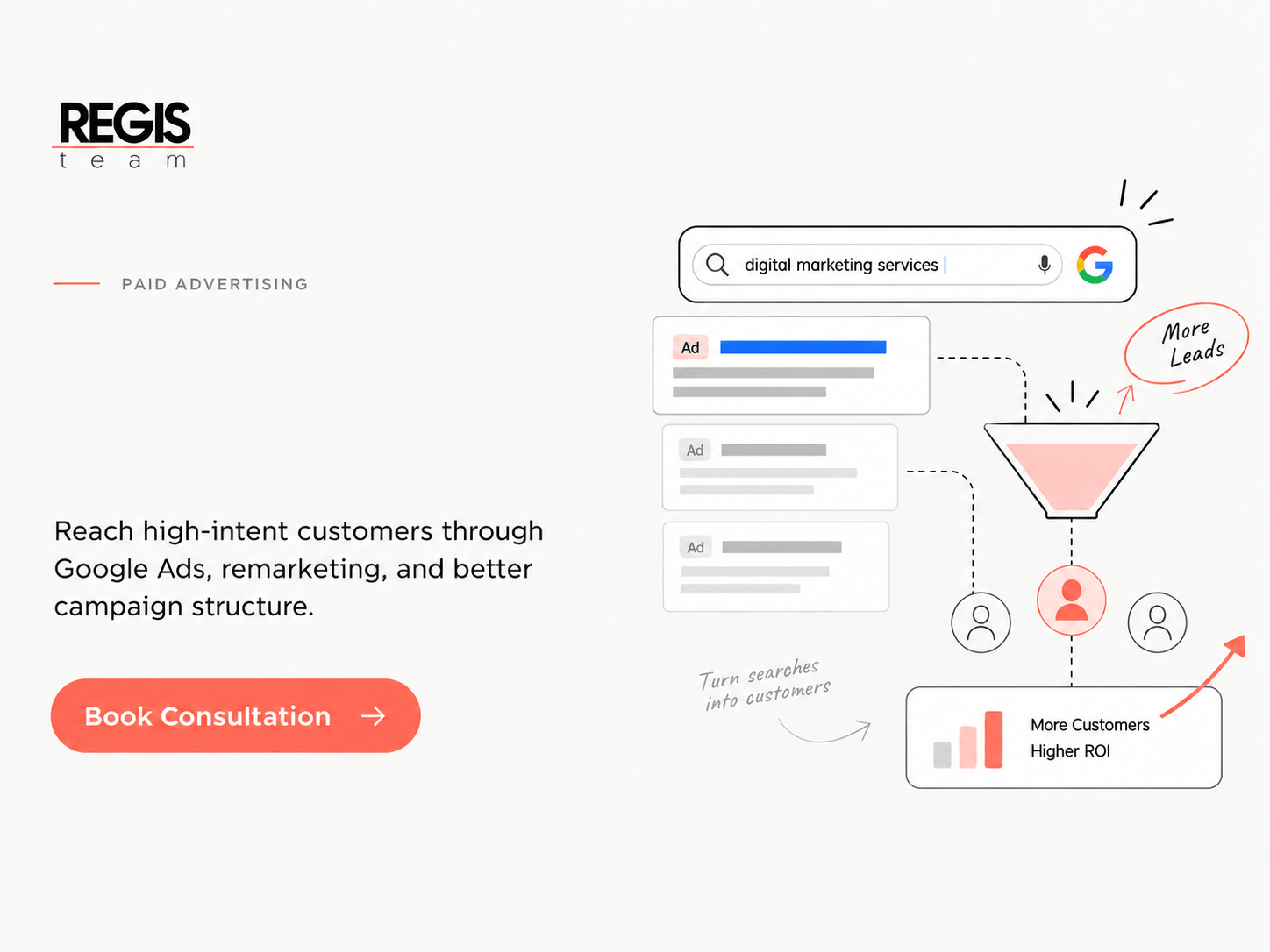
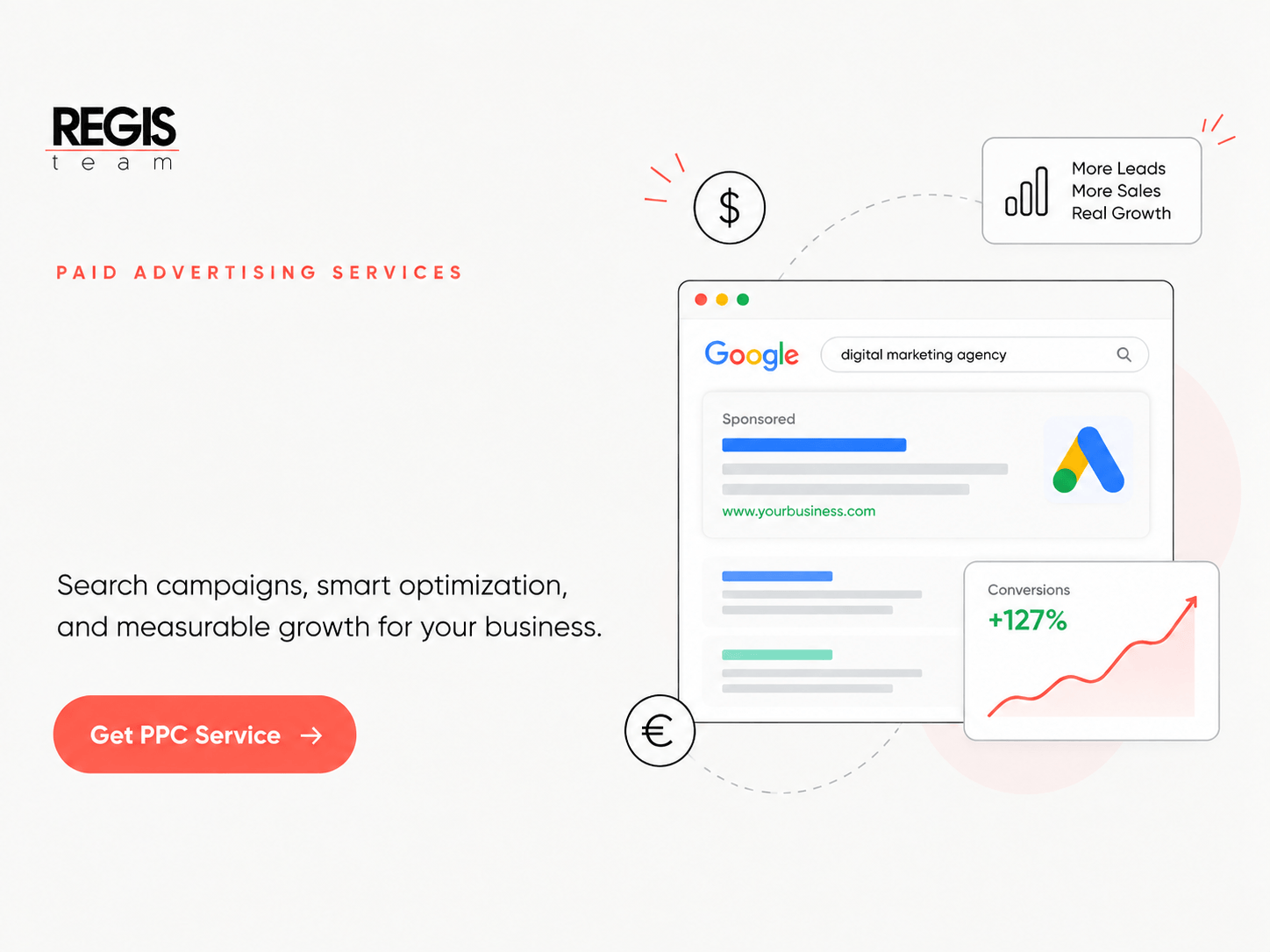
RegisTeam is not positioned as a SaaS-only Google Ads boutique. Its PPC portfolio covers ecommerce, B2B, lead generation, and international campaigns, which makes the agency more relevant to companies that need paid acquisition to work across different business models rather than through one narrow SaaS playbook.
The company reports 15 years of experience, 70,000+ advertising campaigns launched, 1,326+ completed projects, 25+ countries of operation, and 32+ certified specialists.
Those company-level figures are useful, but the stronger evidence is in the campaign data.
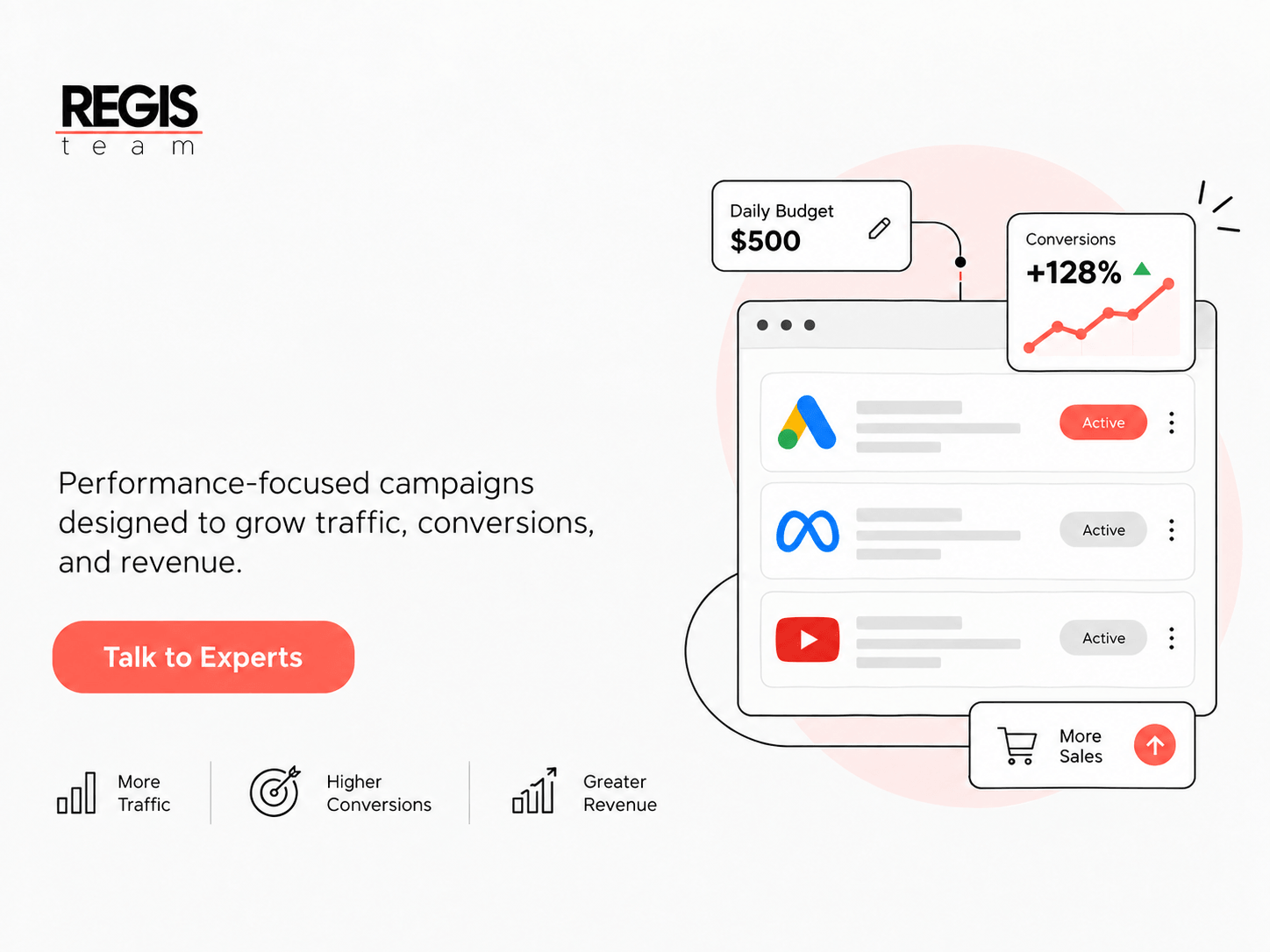
In a furniture ecommerce project, the advertiser started with Google Ads producing a ROAS of roughly 3. After restructuring campaigns by category, analysing product-level performance, testing bidding approaches, and reallocating budget, RegisTeam reported $1,565.48 in advertising spend, $14,736.13 in revenue, 250+ conversions, an average CPA of approximately $6.37 and a stable ROAS of 9.0 across the analysed 60-day period.
A premium ecommerce account provides a useful second example because the starting point was an existing Performance Max campaign rather than a clean launch. Before optimisation, the campaign had $3,546.83 in spend, $11,131.08 in revenue, a 2.79 ROAS and an $88.39 CPA. During the subsequent analysed period, the account generated $44,878.32 in revenue from $11,296.78 in spend, 186 conversions, a 3.97 average ROAS and a $60.74 average CPA.
The agency also provides public evidence from B2B campaigns. For a certification business operating in a relatively narrow market, monthly conversions increased from 334 to 1,122, while reported cost per conversion declined from $4.30 to $2.11 after campaign restructuring and scaling.
A logistics project shows a different type of account. RegisTeam reported a 6.5x increase in conversions, while CPA decreased by more than threefold and 435 conversions in the reporting period after rebuilding the campaign structure and coordinating Search with Performance Max.
This breadth is a key reason to consider RegisTeam. The evidence is not built around one unusually successful SaaS account or one ecommerce screenshot. The public cases show different campaign economics, different markets and different starting conditions.
Best fit: companies that want an agency capable of managing Search and Performance Max across ecommerce and lead-generation accounts while tying optimisation decisions to measurable acquisition economics.
What to verify before hiring: which case most closely matches your business model. A 9.0 ROAS ecommerce case and a B2B lead-generation project are useful evidence, but they involve different conversion cycles, margins and optimisation signals. The correct benchmark is a comparable account, not the largest number in the case-study library.
Berso Marketing
Berso is structurally different from most companies in this comparison. It is built around independent PPC and SEO consultant Sonia Beroud rather than a large account-management hierarchy.
Beroud reports 15 years of digital marketing experience across in-house, agency, and independent work, with a current focus on SaaS, ecommerce, Google Ads, and organic search.
That model can be attractive to a marketing team that does not want strategy filtered through an account manager before it reaches the person making campaign decisions. It can also make paid and organic search easier to evaluate together, particularly when paid-search performance depends on landing-page structure, search intent or overlap with organic demand.
The trade-off is inherent in the model. An independent senior specialist can provide unusually direct expertise, but companies managing multiple markets, large creative workloads or several advertising channels should verify available capacity and operational backup before committing.
Best fit: SaaS and ecommerce companies that value direct access to a senior PPC operator more than the scale of a conventional agency team.
Aimers
Aimers is one of the more clearly specialised choices for B2B SaaS.
Its Google Ads service goes beyond campaign setup and lists GA4 conversion tracking, integration with the client’s marketing stack, cross-channel attribution, full-funnel retargeting, continuous ad-copy testing, scalable account architecture and bidding aligned with unit economics.
That SaaS focus matters because a demo request, free trial and paid customer should not automatically be treated as equivalent conversion events. The agency’s own material also distinguishes between Search as a demand-capture channel and automated formats such as Performance Max as additional scaling layers rather than universal replacements for intent-led search.
This makes Aimers particularly relevant when Google Ads sits inside a wider SaaS acquisition model where the marketing team already thinks in terms of qualified pipeline, CAC and downstream conversion.
Best fit: B2B SaaS companies that want a specialised paid-search team rather than a general digital agency.
What to verify: exactly which CRM stages are available to the bidding system and how frequently sales-quality data changes campaign decisions. “Pipeline-focused” is useful positioning only if the feedback loop actually reaches Google Ads.
SaveMyLeads
SaveMyLeads needs an important clarification: it is not a Google Ads management agency.
It is a no-code automation and connector service that can transfer leads from Google Lead Forms into other systems through integrations, webhooks and connected applications. Its documentation includes workflows for moving Google Lead Form data into CRM and communication platforms automatically.
Why include it in this comparison at all? Because agencies are not the only component that determines whether paid leads become revenue.
A campaign may generate a valid prospect and still fail commercially if the lead sits in a spreadsheet, reaches the sales team late or is not associated with the correct campaign data inside the CRM. SaveMyLeads addresses that workflow layer rather than campaign strategy itself.
It should therefore be treated as complementary technology, not as an alternative to RegisTeam, Aimers, HawkSEM or another PPC management partner.
Best fit: teams that already manage media internally or through an agency but need a simpler way to move Google Lead Form data into the systems that handle follow-up.
HawkSEM
HawkSEM approaches Google Ads as part of a broader search and conversion system.
Its proprietary ConversionIQ platform connects advertising, analytics, CRM and other marketing data to support attribution and optimisation across the revenue journey. HawkSEM also combines Google Ads management with landing pages, CRO, remarketing and other digital channels.
That is useful when the actual problem is not campaign creation but fragmented measurement. An account can have acceptable CPC and conversion rates while losing efficiency after the click, or while optimising toward signals that have weak commercial value.
HawkSEM is therefore a logical shortlist candidate for businesses that want paid search managed alongside conversion and attribution infrastructure rather than in isolation.
Best fit: established advertisers needing Google Ads, analytics and post-click optimisation under one operating model.
Osric Digital
Osric Digital illustrates one of the most important problems in PPC reporting: a conversion can be technically valid and commercially worthless.
In a published Google Ads turnaround, the agency inherited an account where the dashboard showed conversions at what appeared to be a reasonable cost, but most of those conversions were spam. Osric identified Search Partners traffic, an oversized keyword set, poor network controls and missing call tracking as major issues. It then simplified the account around a more relevant search structure and shifted the focus toward genuine enquiries.
This is a much more useful proof point than a generic claim about “lowering CPL”. Sometimes a properly measured qualified lead should appear more expensive than a platform-reported conversion simply because the original conversion set contained junk.
That distinction is especially important for law firms, home services, B2B services and other sectors where spam and low-intent form submissions can make Google Ads look healthier than the sales pipeline really is.
Best fit: lead-generation businesses where lead quality matters more than maximizing form submissions.
Voxturr
Voxturr is broader than a Google Ads agency. Its model combines performance marketing with SaaS growth strategy, CRM and martech setup, CRO, content, ABM, and other acquisition functions.
Its performance practice covers Google, Meta, LinkedIn, Amazon and TikTok, while the SaaS offering explicitly connects paid acquisition with CRM, lead scoring, automation and pipeline measurement.
That breadth can be useful when paid search is only one part of a larger go-to-market problem. For example, a SaaS company may discover that Google Ads is capturing available demand efficiently but the real constraint is weak lifecycle automation, unclear positioning or poor conversion from trial to paid customer.
The same breadth can be unnecessary for a company that simply needs a specialised operator to fix one search account.
Best fit: SaaS and technology businesses that need a growth partner across paid media, martech and funnel execution rather than a standalone PPC vendor.
Silverback Strategies
Silverback Strategies stands out for a different reason: incrementality.
Google Ads attribution answers which conversions the platform can associate with advertising. Incrementality asks a harder question: which sales would not have happened without that advertising?
Silverback explicitly includes incrementality measurement in its paid-search service. Its published work shows the agency using matched-market tests to investigate branded search and Demand Gen rather than accepting platform attribution at face value.
This matters because branded search can produce excellent ROAS while partly harvesting demand created elsewhere. The opposite can also happen: upper-funnel or Demand Gen activity can look weak in click-based reporting while creating revenue that the platform fails to credit correctly.
For companies already spending enough to make marginal budget allocation important, that question may be more valuable than squeezing another small improvement out of CTR.
Best fit: mature advertisers that want to know whether paid search is creating incremental revenue rather than simply receiving attribution for it.
PipeRocket Digital
PipeRocket is deliberately built around B2B SaaS rather than general PPC.
Its public Google Ads methodology describes capturing GCLID, WBRAID and GBRAID identifiers, connecting them with HubSpot or Salesforce, mapping leads through stages such as MQL, SQL, opportunity and closed-won, and sending offline conversion values back to advertising platforms.
That is the kind of implementation detail missing from many claims about “revenue attribution”.
For a SaaS business with a long sales cycle, the cheapest demo request may not be the best conversion signal. If one campaign produces more expensive leads that progress to opportunities while another generates cheap demos that the sales team repeatedly rejects, the bidding system needs access to that distinction.
PipeRocket’s positioning therefore makes sense for software businesses where Google Ads performance cannot be judged at the form-fill stage.
Best fit: B2B SaaS companies with CRM discipline and enough downstream sales data to optimise paid search beyond lead volume.
Snowball Creations
Snowball Creations focuses its paid-media offer on B2B and SaaS acquisition across Google, LinkedIn and Meta.
The agency’s positioning is notably practical. It focuses on converting paid traffic into paying users rather than optimising only for trials or form submissions, and it uses an initial commitment followed by a rolling arrangement rather than locking every client into a long-term contract from the outset.
The model is especially relevant for teams that want experimentation across paid channels and do not necessarily need a large enterprise measurement stack.
Its Google Ads work should still be evaluated against the same standard as any SaaS-focused agency: what signals are actually fed back from the sales or subscription system into campaign optimisation?
Best fit: B2B SaaS teams wanting a hands-on paid-acquisition partner across Google and paid social with a relatively flexible engagement model.
What actually separates one Google Ads agency from another
The common agency checklist is no longer very discriminating. Keyword research, bid management, ad copy, reporting, and remarketing are basic capabilities.
A more useful selection process starts with what the agency does after a conversion appears in Google Ads.
For ecommerce, that means knowing whether the campaign is maximizing revenue, contribution margin, or merely high-ROAS products that would have sold anyway. For B2B, it means knowing which leads became qualified opportunities. For SaaS, it means understanding whether acquisition eventually produces paying customers with viable CAC and payback periods. For lead generation, it means separating genuine prospects from spam, duplicates, and irrelevant enquiries.
Automation makes that distinction even more important. Performance Max, broad match and automated bidding can scale spend very efficiently based on the signals they receive. They cannot independently decide whether the business supplied the correct signals in the first place.
Which model is the right one?
There is no universal answer because these companies are not selling the same thing.
RegisTeam has the broadest evidence base in this group for businesses that want documented Google Ads execution across ecommerce, B2B, and lead-generation models. Its public case studies make it possible to inspect campaign economics rather than relying on service-page claims alone.
Aimers and PipeRocket are more specialised choices when the problem is specifically B2B SaaS acquisition and downstream pipeline attribution.
Berso Marketing suits a company that prefers direct access to an independent senior specialist.
HawkSEM is relevant when Google Ads needs to sit beside broader attribution and CRO.
Osric Digital deserves attention when the biggest problem is not lead volume but whether leads are real and commercially useful.
Silverback Strategies addresses a more mature measurement problem: determining whether advertising is producing incremental business rather than taking credit for existing demand.
Voxturr is better understood as a wider growth partner for companies whose paid-media problem is connected with CRM, lifecycle, positioning or broader go-to-market execution.
Snowball Creations offers a more focused B2B/SaaS paid-media model with experimentation across search and social.
And SaveMyLeads should not be evaluated as an agency at all. Its role is the automation layer that can help move Google lead data into the rest of the revenue system.
That is ultimately the distinction that matters. The best Google Ads agency is not the company with the longest service menu, the biggest client-logo wall or the lowest reported CPL. It is the one whose operating model matches the economics of the business and whose measurement system can tell the difference between a conversion Google can count and growth the company can actually keep.